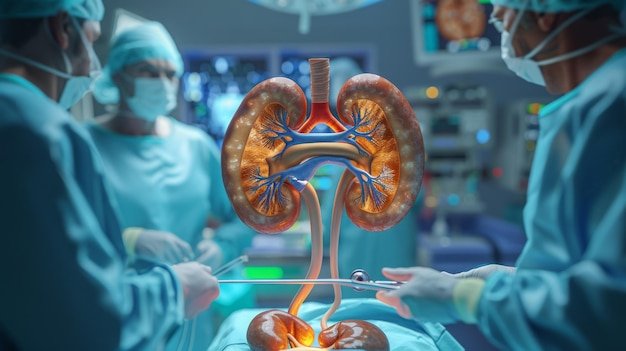
Minimal access urology has transformed the landscape of urinary tract and kidney treatments, offering patients a complicated, patient-centered approach with significantly reduced discomfort and recovery time. As medical technology continues to change, this field has emerged as a leading choice for patients seeking effective solutions with minimal trouble to their daily lives. By relying on smaller incisions, precision-guided instruments, and sophisticated imaging systems, minimal access urology has set new standards safely, efficiency, and overall patient experience.
Minimal access urology is defined by its focus on performing urological procedures using the smallest possible precise access points urologist hong kong. Traditional open operations often require large incisions, leading to pain, blood loss, and lengthy hospital stays. On the other hand, minimally intrusive techniques use tools such as laparoscopes, endoscopes, and robot systems to offer the same or better results with considerably less physical injury. This method allows cosmetic surgeons to navigate complex bodily structures with enhanced visual images, accuracy, and control, helping ensure better outcomes for patients.
A critical benefit from minimal access urology is the lowering of postoperative discomfort. Smaller incisions mean fewer complications, lower risk of infection, and quicker healing. Many patients going through minimally intrusive procedures are able to come back to work and normal activities far sooner than those who undergo traditional surgery. This shift has been especially important for individuals needing treatments for kidney rocks, prostate conditions, urinary obstructions, and bladder issues. Modern approaches allow for highly targeted interventions, reducing damage to surrounding tissue and protecting normal bodily functions.
Another important development associated with minimal access urology is the use of endoscopic techniques. Endoscopy allows specialists to enter the urinary system through natural body openings, avoiding external incisions altogether. Procedures such as ureteroscopy for kidney stone removal are now commonly performed as outpatient treatments. Patients benefit from shorter recovery times and reduced anesthesia requirements, while medical professionals gain real-time visibility inside delicate urinary structures. These advances have made treatments more accessible, safer, and more efficient for people of all ages.
Robot technology has further expanded the capabilities of minimal access urology. Robot systems, well guided by skilled cosmetic surgeons, provide unrivaled precision and maneuverability. Complex tasks such as suturing, dissecting, and removing tissue can be done with meticulous accuracy. Robotic-assisted surgery is specially useful in prostate cancer treatment, part kidney removal, and reconstructive procedures. The enhanced control offered by robot systems reduces the possibilities of complications and improves long-term outcomes, making it an essential tool in modern urological care.
Minimal access urology also highlights improved cosmetic results. Many patients appreciate that minimally intrusive procedures leave smaller, less noticeable marks. This is particularly beneficial for individuals concerned about appearance or those who simply prefer a less intrusive approach. The aesthetic advantages complement the medical benefits, adding to higher patient satisfaction rates and increased readiness to undergo necessary treatments.
In addition to patient-focused improvements, minimal access urology contributes to better resource usage within healthcare facilities. Shorter hospital stays, reduced need for postoperative monitoring, and lower side-effect rates allow private hospitals to set aside resources more efficiently. This creates a more streamlined patient flow and reduces overall healthcare costs. Many institutions now prioritize minimally intrusive procedures because of their efficiency and high success rates.
Advancements in imaging technology play a vital role in the success of minimal access urology. High-resolution ultrasound, CT runs, and MRI systems provide detailed images that help specialists detect conditions with greater accuracy. During surgery, real-time imaging helps guide instruments through complex internal trails, improving safety and precision. These technologies support minimally intrusive approaches by enabling cosmetic surgeons to see critical structures avoiding unnecessary damage.
Ongoing research continues to push minimal access urology forward. Innovations such as laser lithotripsy for kidney stone treatment, arctic treatments for prostate enlargement, and improved stent designs have expanded treatment plans and enhanced patient comfort. As new tools and techniques emerge, the field becomes even more capable of addressing a wide range of urological conditions with reduced pain and downtime.
Education and training are very important for maintaining high standards in minimal access urology. Cosmetic surgeons specializing of this type undergo rigorous training to develop the delicate skills required to operate advanced equipment. Continuous learning ensures that healthcare professionals stay updated on the latest technologies and guidelines, ultimately reaping benefits for the patients who rely on their expertise.